
Awnings That Can Withstand Charleston Weather Conditions
Aug 01, 2026Charleston homeowners enjoy some of the best outdoor living opportunities in the country. From spring afternoons on the patio to fall evenings overlooking the marsh, outdoor spaces are a major part of life in the Lowcountry.
Unfortunately, Charleston weather can be just as demanding as it is beautiful. Intense summer sun, salt air, heavy rainfall, high humidity, tropical storms, and hurricane season all place tremendous stress on outdoor structures. An awning that performs well in another part of the country may struggle when exposed to years of coastal South Carolina weather.
One of the most common questions we hear at Express Sunrooms of Charleston is: “What is the best awning that can withstand Charleston weather conditions?” The answer is not as simple as choosing the strongest fabric or the heaviest frame. The best awning depends on how you use your outdoor space, your home’s exposure to wind, and your long-term goals for protection and comfort.
Understanding how Charleston weather affects awnings is often more important than comparing products alone.
A recent installation we completed on a Mount Pleasant, SC property shows this approach in action and it’s a good reference point as you read through the rest of this guide.
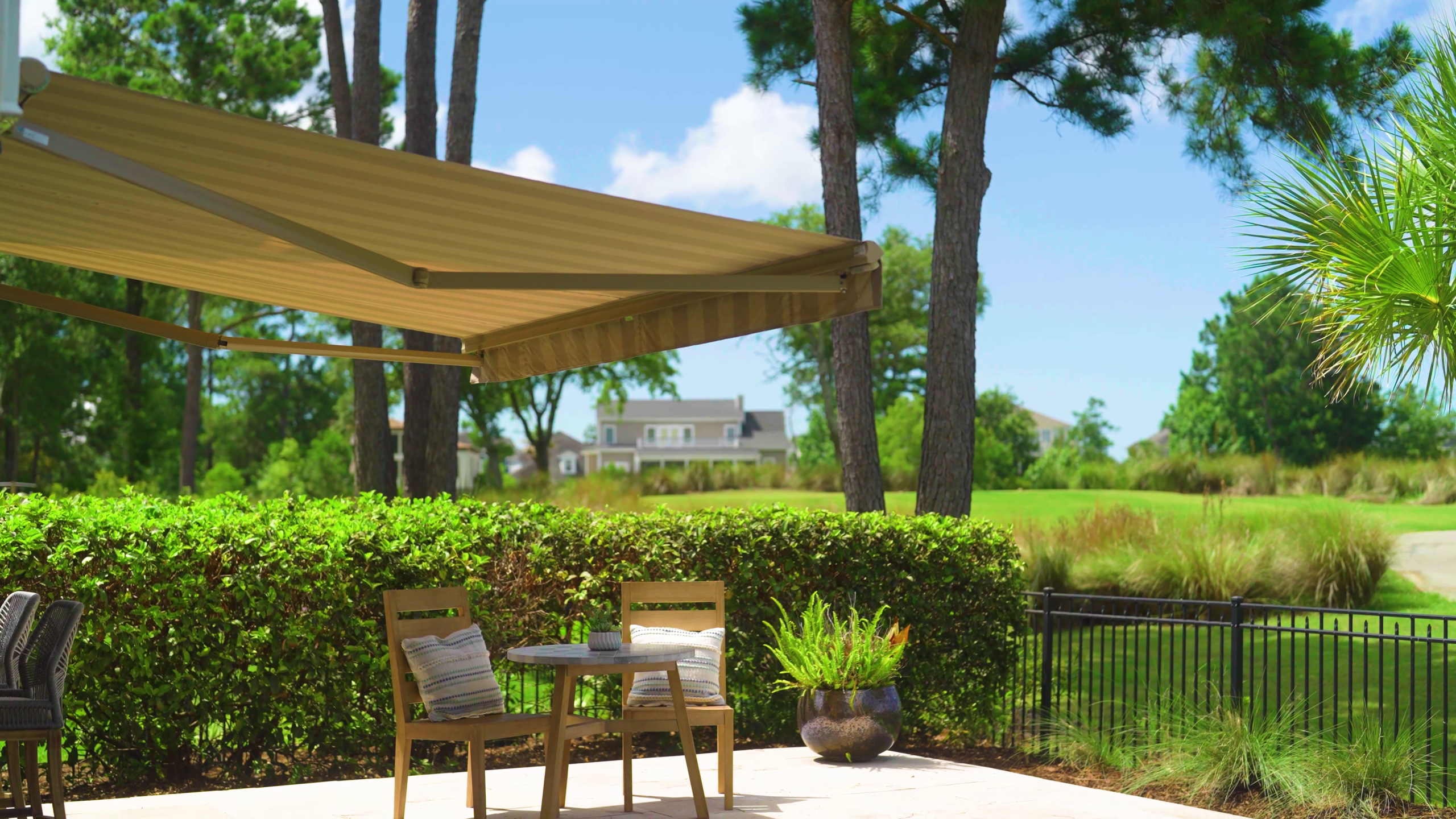
A motorized retractable awning extended over a patio seating area on the property, backing up to open lawn and marsh grass. That open exposure means this space sees direct wind and sun with little natural break, exactly the kind of site where retractability and frame engineering matter most.
Charleston Weather Creates Unique Challenges for Outdoor Structures
Charleston’s climate doesn’t stress an awning one factor at a time it stacks them. A frame might sit through a 95-degree, 90%-humidity July afternoon, then take a direct line of wind off the harbor that evening, then get soaked by an afternoon thunderstorm the next day. It’s that combination, repeated for months on end, that separates awnings built for the Lowcountry from awnings simply built to survive somewhere sunny.
Salt air is the factor most homeowners underestimate. It doesn’t just dull metal finishes, it works into fasteners, hinges, and motor housings over time, which is why hardware grade matters as much as fabric choice on any property within a few miles of tidal water. Add in the humidity that never fully lets up, and you have ideal conditions for mildew on any fabric that isn’t specifically treated for it, plus the wind loads that come with hurricane season from June through November.
Why Wind Resistance Matters More Than Most Homeowners Realize
Wind is the variable that catches people off guard, because it’s invisible until it isn’t. A retractable awning fully extended is essentially a sail bolted to your house and the bigger the projection, the more force a gust puts on the mounting hardware and support arms.
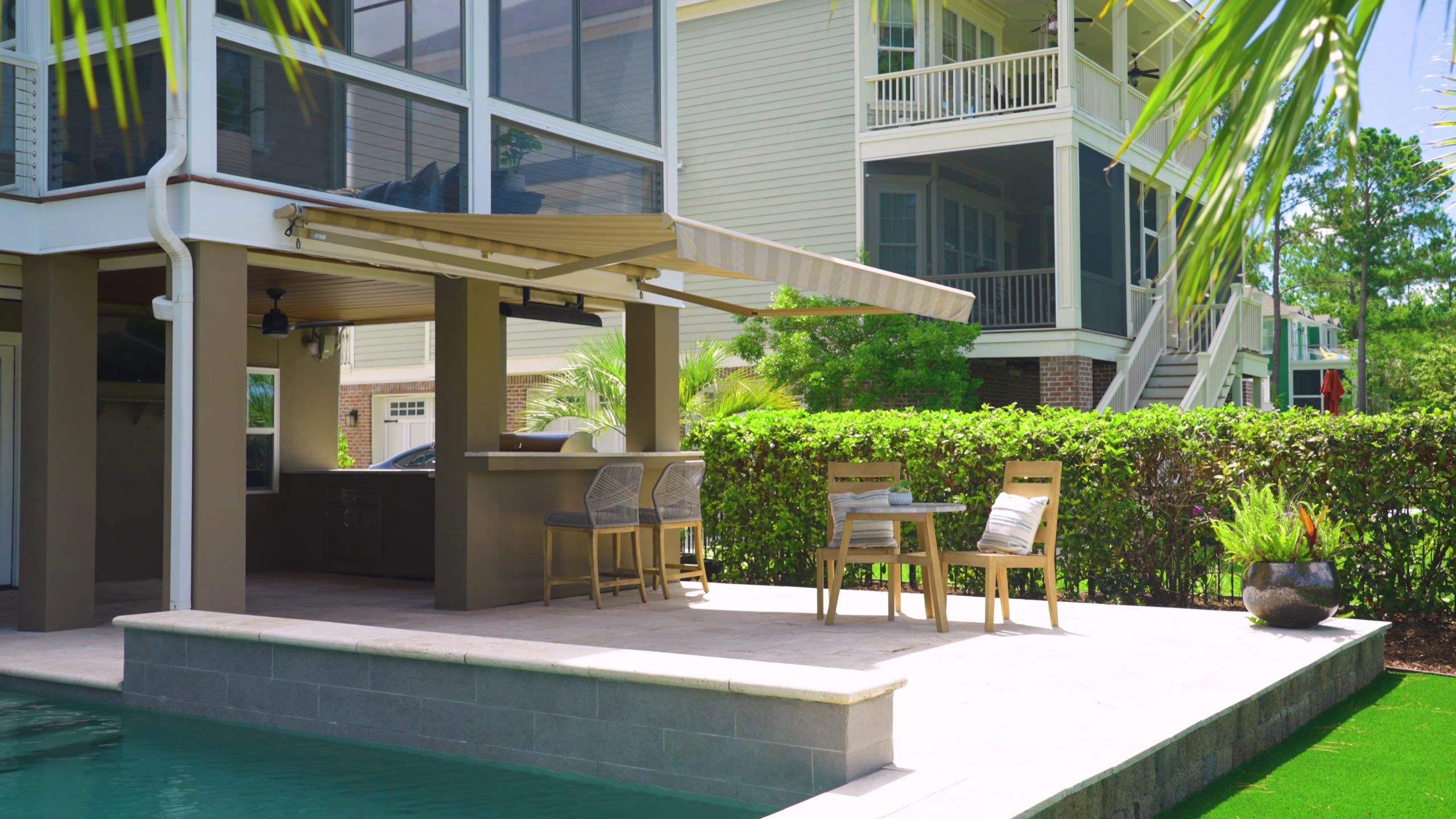
On a recent waterfront project, this wasn’t a theoretical concern. The home sits on a tidal creek with nothing but open water breaking up wind on one side. That kind of exposure changes the engineering conversation entirely: it’s not just “how big a shade do you want,” but “how do we keep a 10-12 foot span from sagging or vibrating when the wind kicks up off the water.” That’s a different problem than shading a backyard tucked behind a fence line, and it needs a different answer: heavier-gauge support arms, reinforced mounting points, and a motor strong enough to retract cleanly under load.
Retractable Awnings: Often the Best Choice for Charleston Homes
Charleston weather is one of the biggest reasons we often recommend retractable awnings. A patio that’s comfortable on a sunny afternoon can be dealing with strong coastal wind or an approaching thunderstorm later that day. Being able to retract the awning helps reduce unnecessary exposure when conditions change.
At Express Sunrooms of Charleston, we install motorized retractable awning systems from trusted national manufacturers including SunSetter, Sunesta, and MaxShade Awnings. These manufacturers are known for producing retractable shade systems designed for long-term outdoor performance, customizable coverage options, and convenient motorized operation that allows homeowners to quickly respond to changing weather conditions.
A closer look at the same installation shows how these systems are actually built to handle that flexibility. The motorized housing, articulating support arms, and reinforced mounting brackets all work together so the awning can extend to a full 10-12 foot projection and still retract cleanly at the push of a button when a storm is forecast.
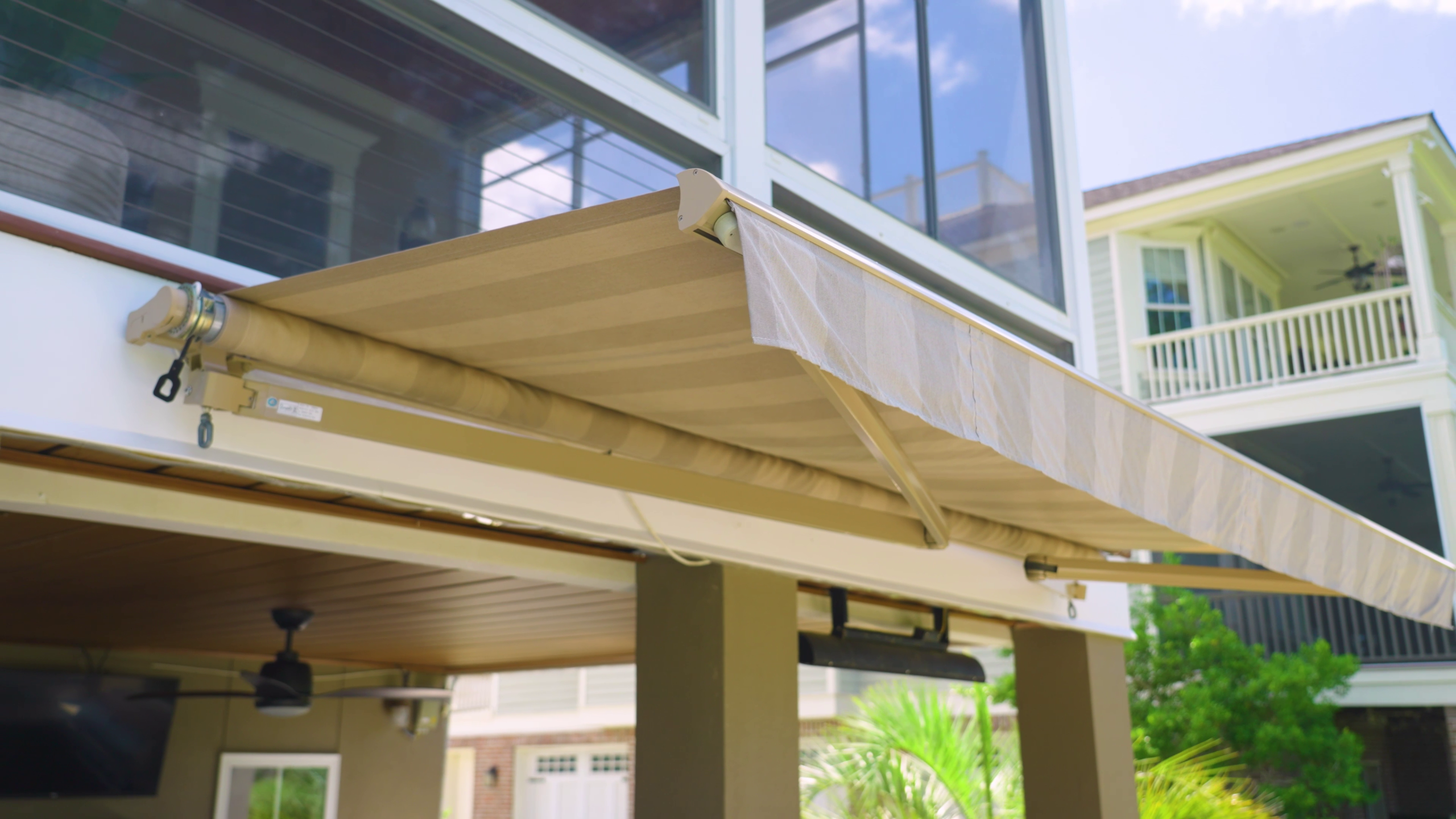
A detailed view of the motorized housing and folding support arm on the same waterfront installation. Hardware like this is what determines how an awning holds up through repeated retraction cycles and coastal humidity.
Not All Fabrics Are Created Equal
Two awnings can look nearly identical in a showroom and perform completely differently after three Charleston summers. The difference usually isn’t visible until it’s too late, a lower-grade fabric might hold its color for a season or two before UV exposure starts breaking down the coating, at which point mildew gets a foothold in the weave and no amount of cleaning fully removes it.
Solution-dyed acrylic fabrics, the kind used in higher-end SunSetter and Sunesta systems, resist this because the color is baked into the fiber itself rather than applied as a surface coating, so fading and moisture don’t compound each other the way they do on cheaper woven fabrics. But fabric is only half the story: a premium fabric on a frame with undersized seam reinforcement will still fray at the edges from repeated retraction, especially in a climate where that fabric is getting rolled up wet more often than in drier regions.
The Best Awning Is the One Designed for Your Property
One question we hear frequently is, “Which awning do you recommend?”
Our answer is almost always, “Let’s look at the house first.”
Two homes can request the exact same size awning and need completely different solutions. A shaded backyard surrounded by mature live oaks behaves differently than a patio overlooking open marsh. A west-facing deck that absorbs afternoon heat creates different comfort challenges than a covered porch that only receives morning sun.
When we evaluate a property, we’re looking at how the outdoor space actually functions throughout the day. Where does the sun move? Where does the wind come from? Is the mounting surface solid masonry, wood framing, or fiber cement? Will the awning primarily provide occasional shade for weekend gatherings, or will it be extended nearly every afternoon throughout the summer?
Those conversations usually have a greater impact on the final recommendation than comparing fabric colors or brand names. The best awning is the one that’s designed around the conditions your home experiences every day.
Looking Beyond the Awning
Not every consultation ends with us recommending an awning. Sometimes homeowners begin looking for shade when the real goal is creating an outdoor space they can use more often throughout the year. As we walk the property, we occasionally find that a patio cover, screened enclosure, pergola, or even a sunroom will solve the problem more effectively than a retractable awning.
For example, a homeowner dealing with intense afternoon sun may also want protection from insects and wind. Another family may want to keep furniture dry throughout the year instead of simply creating shade during the summer. In those situations, expanding the conversation beyond awnings often leads to a better long-term investment.
Our goal isn’t to recommend the biggest project. It’s to understand how you want to use your outdoor space and suggest the solution that makes the most sense for your property, your lifestyle, and Charleston’s climate.
Why Charleston Homeowners Work With Express Sunrooms
Choosing the best awning starts with understanding how Charleston weather affects outdoor living spaces. At Express Sunrooms of Charleston, we help homeowners evaluate the specific conditions around their property before recommending a solution. Rather than focusing solely on product specifications, we look at how the space will actually be used and what challenges it will face over the coming years. Our team considers factors such as sun exposure, outdoor living goals, and long-term maintenance requirements. The result is a recommendation designed around your home rather than a generic product pitch.
Find the Best Awning for Your Charleston Home
If you’re searching for the best awning that can withstand Charleston weather conditions, the right answer starts with understanding your property, your goals, and the demands of the Lowcountry climate. Our team can help you evaluate the options and determine what makes the most sense for your home.
Contact Express Sunrooms of Charleston today to schedule a consultation and discover the outdoor shade solution built for Charleston’s unique coastal environment.